Dumbbell Romanian Deadlift: Form, Muscles, and Programming
Master the dumbbell Romanian deadlift with evidence-based form cues, range of motion guidance, and a programming framework for stronger hamstrings.
Medical Disclaimer: This content is for informational purposes only and is not a substitute for professional medical advice. Consult a qualified healthcare provider before starting any new fitness or supplement program.
In this article
The dumbbell Romanian deadlift is one of the most efficient ways to build hamstring and glute strength without the setup hassle or lower back fatique of the barbell version. This guide covers the form cues that actually matter, common mistakes, the variations worth knowing, and a programming framework with concrete numbers.
What Is the Dumbbell Romanian Deadlift?
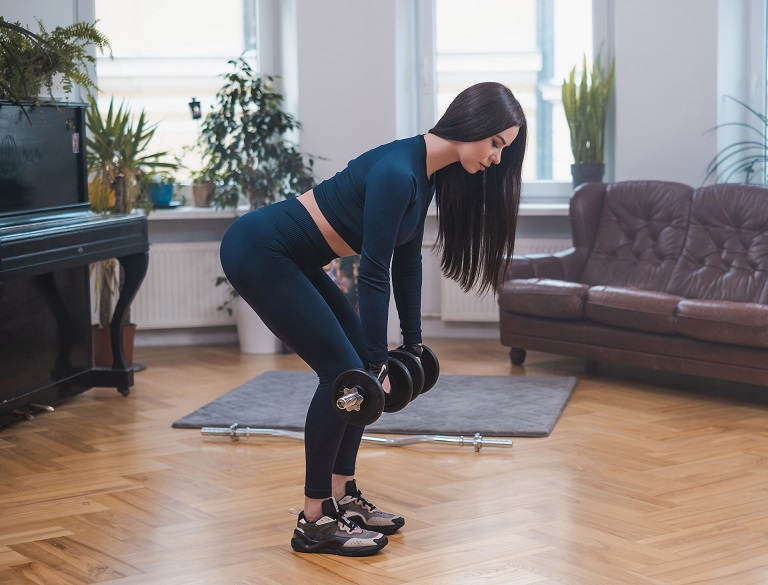
The dumbbell Romanian deadlift is a hip hinge exercise performed standing with a dumbbell in each hand. The lifter pushes the hips back and lowers the dumbbells down the front of the legs, maintaining a slight knee bend throughout, then drives the hips forward to return to the standing position.
It belongs to the broader posterior chain compound family along with the conventional deadlift, the barbell Romanian deadlift, and the good morning. As a foundational hip hinge compound, the dumbbell version is often preferred over the barbell variant for learning the movement, training at home, or accessing greater range of motion at the bottom. It earns a primary spot on lower body day for any lifter focused on hamstring and glute development. For the broader context on dumbbell-based programming, see our guide on strength training with dumbbells.
Muscles Worked by the Dumbbell Romanian Deadlift
The primary movers are the hamstrings and the glutes, particularly the glute max. The hamstrings handle most of the eccentric load on the descent and assist with hip extension on the way up. The glute max drives hip extension on the concentric.
Secondary muscles include the lower back (spinal erectors stabilize the neutral spine under load), traps and forearms (grip and shoulder positioning), core (anti-flexion stabilization), and the adductors (medial thigh stabilization throughout the hinge). The lift looks like a hamstring isolation exercise at first glance but recruits the entire posterior chain when performed correctly.
How to Perform the Dumbbell Romanian Deadlift
Setup
Stand with your feet hip-width apart, toes pointing forward or slightly out. Hold a dumbbell in each hand with a neutral grip, palms facing the thighs. Arms straight at your sides, dumbbells resting against the front of your legs.
Pull your shoulders back and down, chest up. Brace your core by taking a breath into your belly and holding it. Bend your knees slightly, somewhere between 5 and 15 degrees, and lock that knee angle in place for the entire set. The knees should have a very light bend.
The best grip for this lift is somewhere between overhand amd neutral, as this is the ideal position for the dumbbells to not be away from your center of gravity or at an awkward completely neutral position.
Going Down
Hinge at the hips by pushing your glutes back as if reaching for a wall behind you. The torso tilts forward as a counterbalance. The dumbbells track straight down along the front and slightly of your legs, almost grazing the thighs and shins on the way down.
Keep the back flat (neutral spine), chest up, and head in line with your spine. Eyes on a point on the floor 6 to 10 feet ahead.
Lower until you feel a strong stretch in the hamstrings. For most lifters with average flexibility, that’s mid-shin to ankle. For lifters with tight hamstrings, it’s just past the knee. The moment your lower back wants to round to chase more depth, you’ve gone too far. Stop short of that point on every rep.
Coming Up
Drive the hips forward to return to standing. The hamstrings and glutes do the work. Keep the dumbbells close to the body throughout the ascent, the same path they took on the way down.
Finish standing tall with hips fully extended. Squeeze the glutes at the top for a brief moment. Do not lean back into hyperextension at lockout. The body should be vertical, not arched.
Common Form Mistakes (and How to Fix Them)
Rounded lower back: the most dangerous error and the one that puts disc pressure on the lumbar spine. Fix: stop the descent earlier, even if it feels short of full range. Hamstring flexibility limits depth. The back must stay neutral or the load goes to the wrong place.
Dumbbells drifting forward: when the weights leave contact with the legs, the lever arm on the lower back increases dramatically. Fix: cue “shave the legs,” keeping the dumbbells almost touching the thighs and shins throughout the descent. Bring your grip closer to neutral if drift is persistent.
Bending the knees mid-rep: turning the lift into a squat-deadlift hybrid that no longer trains the hamstrings the way intended. Fix: lock the knee angle at the start of the set and do not let it change. If the knees want to bend, the hamstrings are likely fatigued or undertrained.
Looking up: extending the cervical spine pulls the lower back into hyperextension at the top. Fix: eyes on a point on the floor 6 to 10 feet ahead, neck neutral throughout the rep.
Hyperextending at the top: finishing the rep by leaning back into lumbar extension instead of standing tall. Fix: finish each rep with hips squarely under shoulders, glutes squeezed, no back arch.
Rushing the eccentric: dropping the dumbbells quickly loses the hamstring stretch and reduces the muscle-building stimulus. Fix: lower over 2 to 3 seconds, controlling the descent.
Variations Worth Knowing
Single-Leg Dumbbell Romanian Deadlift
The unilateral version, performed on one leg with one dumbbell typically held in the opposite hand from the working leg. The non-working leg extends behind for balance. This variant fixes side-to-side strength imbalances, improves balance, and reduces total spinal load. Particularly valuable for athletes returning from hamstring or knee injuries.
Step-Romanian Deadlift
Stand on a small platform (2 to 4 inches) so the dumbbells can descend below the level of your feet, alongside your calves. The increased range of motion produces a deeper hamstring stretch and, per the Coratella research, the highest hamstring activation of any deadlift variation studied. A solid choice for hypertrophy-focused training blocks.
Stiff-Leg Deadlift with Dumbbells
The legs stay fully locked, no knee bend at all. This shifts more of the load onto the lower back and reduces hamstring isolation. It’s a different lift with a different stimulus distribution, useful as occasional variety but not a substitute for the standard Romanian deadlift.
Barbell Romanian Deadlift
Allows heavier absolute loads, but the bar typically hits the floor before the hamstrings reach their full stretch position, which truncates range of motion. Most lifters move 30 to 50% more weight on the barbell version due to the bilateral loading and lack of grip strain per hand.
Trap Bar Romanian Deadlift
Hybrid option using a trap bar for a neutral grip and centered load. Comfortable on the wrists and easy to set up, but the bar position changes the hinge mechanics slightly. Worth experimenting with if available.
How to Program Dumbbell Romanian Deadlifts
The dumbbell Romanian deadlift fits naturally on lower body day, and it pairs particularly well with squats and leg presses because it trains the hamstrings at the lengthened position, which squat-dominant lifts under-train. The complementary stimulus is one of the best reasons to include both in the same lower body session.
For pure strength work, 3 to 5 sets of 6 to 8 reps at 75%+ of 1RM. For hypertrophy, 3 to 4 sets of 8 to 15 reps at 65 to 75% of 1RM. The Romanian deadlift responds especially well to higher rep ranges because the eccentric load on the hamstrings is the primary growth driver, and that’s accumulated through volume. Check our rep ranges for muscle growth guide for more details.
Working Weight Benchmarks
Beginner: 0.4 to 0.6 times bodyweight per dumbbell for 8 to 10 reps. For a 70 kg (155 lb) lifter, that’s roughly 12 to 20 kg (25 to 40 lb) per hand.
Intermediate: 0.6 to 0.8 times bodyweight per dumbbell for 6 to 8 reps. Same 70 kg lifter: 20 to 28 kg (45 to 60 lb) per hand.
Advanced: 0.8 to 1.0+ times bodyweight per dumbbell for 5 to 6 reps. 70 kg lifter: 28 to 35 kg or more (60 to 75 lb+) per hand.
Worth noting: dumbbell selection often becomes the limiting factor before strength does.
Progression Scheme
Once you hit the top of your rep range across all working sets, add 2.5 kg (5 lb) the following session and drop back to the bottom of the rep range. Rinse and repeat. This is called double progression, and it works for beginners and intermediates through the first years or serious training.
The Hamstring Injury Prevention Angle
The dumbbell Romanian deadlift is one of the most evidence-supported exercises for reducing hamstring strain risk, particularly for sprinters, soccer players, runners, and field sport athletes. Eccentric loading at long muscle lengths is the mechanism. The hamstring is loaded heavily while lengthening, which builds tissue resilience to the high eccentric forces that cause sprint and acceleration injuries.
The dumbbell version specifically allows more controlled eccentric tempo than the barbell variant, because the lighter absolute loads make slow, deliberate descents feasible without form breakdown. This makes it particularly useful for athletes returning from hamstring strains, in pre-season conditioning blocks, or for anyone building toward sprint or jump performance.
For athletes, 2 to 3 sets of 6 to 10 controlled reps with a 3 second eccentric is often a sweet spot. The volume doesn’t need to be extreme. The eccentric quality matters more than the total work.
Should You Use Lifting Straps for Dumbbell Romanian Deadlifts?
Above 25 to 30 kg per dumbbell for most lifters, grip becomes the limiting factor before the hamstrings tap out. Lifting straps allow the target muscles to work to true fatigue without grip cutting the set short.
This matters more on Romanian deadlifts than on most lifts because the time under tension on grip is significantly longer than during rows, pulls, or quick lifts. A set of 10 controlled RDLs with 3 second eccentrics holds the dumbbells under load for 30+ seconds. That’s a long time for the forearms, especially with heavier dumbbells. Below those loads, grip is fine training stimulus on its own.
Dumbbell Romanian Deadlift vs Other Hamstring Exercises
Against the barbell Romanian deadlift, the barbell version allows heavier absolute loads while the dumbbell version allows greater range of motion and unilateral imbalance correction. Use dumbbells mainly when learning the movement, training at home, or accessing the deeper hamstring stretch.
Against the conventional deadlift, the conventional starts from the floor with active knee bend and recruits the quads heavily. The Romanian starts from standing with locked knees and isolates the posterior chain. They train different patterns and complement each other in a well-rounded program.
Against the seated or lying leg curl, the leg curl isolates the hamstrings at the knee joint while the Romanian deadlift trains them at the hip joint. The hamstrings have functions at both joints, which is why well-designed programs include both rather than choosing.
Against the barbell hip thrust, the hip thrust trains the glutes at the shortened position while the Romanian deadlift trains them at the lengthened position. They’re complementary, not competing. Together they cover the full range of glute development.
The dumbbell Romanian deadlift is one of the best tools available for posterior chain development, athletic performance, and hamstring resilience. Get the form right, respect your hamstring flexibility, build the load gradually, and pair it with adequate recovery and protein intake for muscle growth to actually build the tissue. For the broader principles on driving long-term progress, see our guide on how to increase muscle growth.
Frequently Asked Questions
Is the dumbbell Romanian deadlift safe for the lower back?
How heavy should I go on dumbbell Romanian deadlifts?
What's the difference between Romanian deadlift and stiff-leg deadlift?
How often should I train dumbbell Romanian deadlifts per week?
Do I need to do Romanian deadlifts if I already deadlift conventionally?
Continue reading
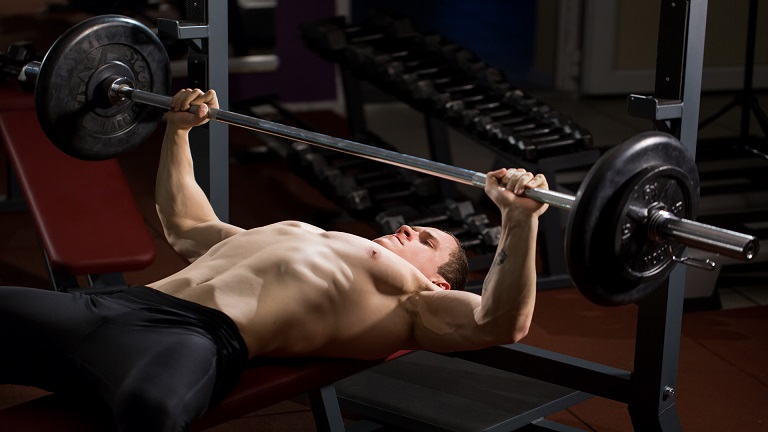
Barbell Bench Press: Form, Muscles, and Programming
Master the barbell bench press with evidence-based form cues, grip width guidance, and a programming framework that optimizes progress.
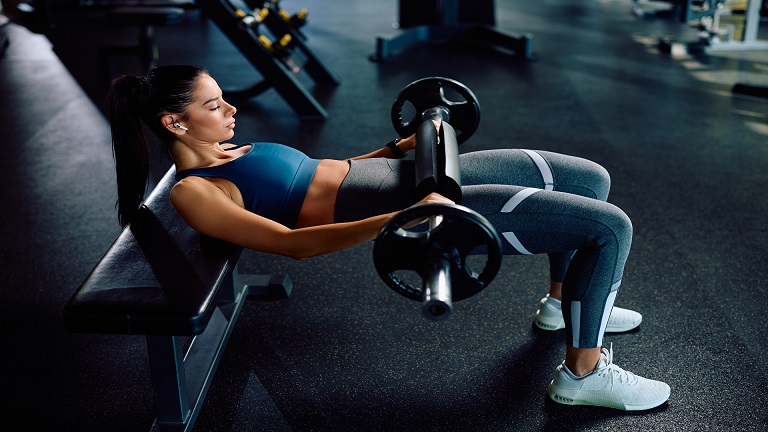
Barbell Hip Thrust: Form, Muscles Worked, and Programming
Master the barbell hip thrust with evidence-based form cues, foot placement, and a programming framework for stronger, more developed glutes.
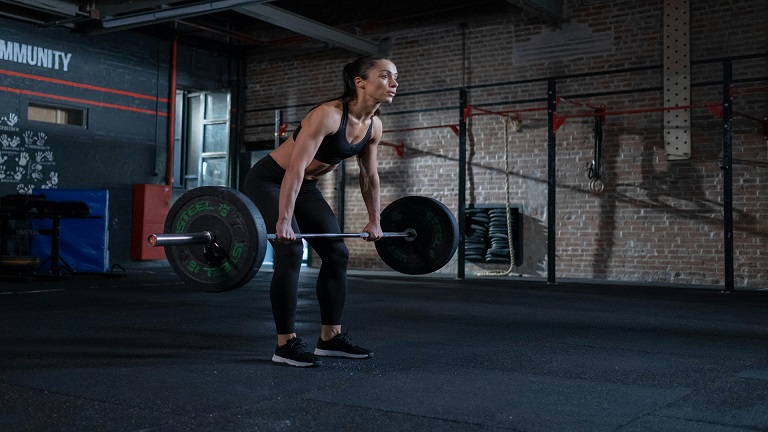
Barbell Bent Over Row: Form, Muscles Worked, and Programming
Master the barbell bent over row with evidence-based form cues, muscles worked, variations, and a programming framework for strength and hypertrophy.
Free newsletter
Evidence-based fitness and health insights, delivered to your inbox.
No spam. Unsubscribe at any time.
Thanks for subscribing!