Barbell Bent Over Row: Form, Muscles Worked, and Programming
Master the barbell bent over row with evidence-based form cues, muscles worked, variations, and a programming framework for strength and hypertrophy.

Medical Disclaimer: This content is for informational purposes only and is not a substitute for professional medical advice. Consult a qualified healthcare provider before starting any new fitness or supplement program.
In this article
Few free-weight exercises build a thick, strong back the way the barbell bent over row does. This guide covers the form cues, the muscles it trains, the variations worth knowing, and a programming framework that tells you exactly what you should be lifting at each stage of your training.
What Is the Barbell Bent Over Row?
The barbell bent over row is a compound pulling movement performed with the torso hinged forward from the hips, pulling a loaded barbell from arms’ length up to the lower torso. It belongs to the broader family of row exercises, which also includes seated cable rows, dumbbell rows, T-bar rows, and machine rows.
Among these, the barbell bent over row is the gold standard for free-weight back training. It loads the entire posterior chain, teaches full-body bracing under load, and transfers well to other heavy compound lifts like the deadlift and pull-up. If you want a single exercise that builds a thick, wide, strong back, this is it. It also anchors most well-designed pull-day routines as a primary compound back builder.
Muscles Worked by the Barbell Bent Over Row
The primary movers are the lats, rhomboids, middle and lower traps, and rear delts. These muscles are responsible for pulling the bar from the bottom position up to the torso, and for retracting the shoulder blades at the top of the rep.
Secondary muscles include the biceps and brachialis, forearms (grip), spinal erectors (isometric spinal stabilization), and the glutes and hamstrings, which hold the hip-hinge position throughout the set. The result is a lift that trains far more than just the back.
How to Perform the Barbell Bent Over Row
Setup
Stand with your feet about hip-width apart and your toes turned slightly outward. Position the bar directly over your midfoot, roughly above your shoelaces. Hinge at the hips with a slight bend in the knees until your torso sits 15 to 45 degrees above parallel with the floor.
A strict parallel torso is commonly prescribed but is rarely the safest or most productive angle. A slightly higher torso position reduces shear forces on the lower back while still recruiting the same muscles.
Grip the bar overhand, hands just outside shoulder width. A slightly wider grip (around 150% of your biacromial width, meaning noticeably wider than shoulders) has been shown to increase latissimus dorsi activation compared to a narrower grip. Keep your spine neutral, chest up, and eyes fixed on a point six to ten feet ahead of you. Take a deep breath into your belly and brace hard before the first pull.
Pulling
Drive your elbows up and back rather than pulling with your hands. Your hands are hooks on the bar. The back and shoulder muscles should be doing the work.
Pull the bar to the bottom of your rib cage or lower sternum. Squeeze your shoulder blades together briefly at the top.
Keep your torso angle steady throughout the pull. If your chest rises and your hips drop mid-rep, the set has turned into a partial deadlift, and the back contraction becomes a secondary event. Some hip drive is acceptable on heavy strength work, but the torso angle should not change dramatically.
Going Down
Lower the bar under control over roughly one to two seconds. Let the lats fully lengthen at the bottom so the next rep starts from a genuine stretch. Cutting the range of motion short at the bottom is one of the easiest ways to underbuild the back despite heavy loading.
From here you have two options:
- A Pendlay row fully resets the bar on the floor between reps, which is better for heavy strength work because every rep starts fresh from a dead stop with no stretch reflex.
- A touch-and-go row keeps the bar off the floor (at arms’ length) and flows directly into the next rep. This is better for hypertrophy because it maintains time under tension across the full set.
Common Form Mistakes (and How to Fix Them)
Rounded lower back: This is the most common form failure and the one most likely to hurt you. The fix is threefold: brace harder before the pull (take a full belly breath and hold it), drop the load by 15 to 20%, and raise your torso angle slightly.
Pulling the bar to the wrong point: Many lifters pull to the navel (too low, shifts load off the upper back) or the upper chest (too high, turns it into a high pull). The cue that works: pull to the bra line or lower sternum.
Too much hip drive: Film a set from the side. If your torso angle changes by more than 15 degrees during the pull, you’re using hip extension to move the bar. Reduce the load by 10 to 15% and focus on keeping the torso locked.
Shrugging the traps instead of rowing: If the bar drifts upward toward your chin rather than back toward your sternum, your traps are firing before the rhomboids and lats can engage. Cue: pull your elbows back toward your hips, not up toward the ceiling.
Incomplete range of motion: Stopping short at the bottom robs the lats of the stretch that drives growth. Let your arms fully extend at the bottom of every rep.
Variations Worth Knowing
Pendlay Row
Named after the late Olympic weightlifting coach Glenn Pendlay, this version fully resets the bar on the floor between every rep. Because the stretch reflex is removed, each rep starts from a dead stop, which is why the Pendlay row is favored for heavy strength work where form integrity matters more than time under tension.
Yates Row
Popularized by six-time Mr. Olympia Dorian Yates, the Yates row uses an underhand (supinated) grip and a more upright torso, typically 30 to 45 degrees above parallel. The grip change shifts emphasis toward the lats and biceps, while the more upright angle reduces lower back stress. A solid choice when your lower back is beat up but you still want heavy rowing volume.
Dumbbell Bent Over Row
Done one arm at a time with a bench or rack for support. The unilateral loading pattern fixes left-right strength imbalances that barbells mask, and the greater range of motion is easier on some lifters’ shoulders. A well-programmed dumbbell training routine often pairs the barbell row with single-arm dumbbell work for balanced development.
T-Bar Row
Loaded at one end of a barbell anchored to the floor, with the lifter straddling the bar and pulling with a close neutral grip. The T-bar row reduces lower back stress compared to the bent over row (because the weight is further from the body’s center of mass differently), which allows heavier loading. A strong accessory, though total muscle recruitment is slightly lower than the free-weight bent over row.
How to Program Barbell Bent Over Rows
The bent over row fits naturally into a pull day or a back day, typically as the second compound movement after deadlifts (if deadlifts are programmed that day) or as the primary exercise when deadlifts are elsewhere in the week.
For pure strength work, 3 to 5 sets of 3 to 6 reps at 80%+ of 1RM is standard. For hypertrophy, 3 to 4 sets of 6 to 12 reps at 65 to 75% of 1RM covers the range where most back growth happens. The fuller breakdown on rep ranges for muscle growth applies cleanly here.
Working Weight Benchmarks
Here are concrete benchmarks most lifters can aim for:
Beginner (0 to 6 months of training): 0.5 to 0.75 times bodyweight for 8 to 10 reps. For an 80 kg (176 lb) lifter, that’s roughly 40 to 60 kg (90 to 130 lb).
Intermediate (6 to 24 months): 1.0 to 1.25 times bodyweight for 6 to 8 reps. Same 80 kg lifter now rows 80 to 100 kg (176 to 220 lb).
Advanced (2+ years of dedicated training): 1.5+ times bodyweight for 5 to 6 reps. An 80 kg lifter in this range pulls 120 kg or more.
These are targets, not requirements. Anatomy, training age, and programming all affect absolute numbers. Use them as a rough map.
Progression Scheme
Once you hit the top of your rep range across all working sets, add 2.5 kg (5 lb) to the bar the following session and drop back to the bottom of the rep range. Repeat the cycle. This is double progression, and it works for beginners and most intermediates through the first year or two of consistent training.
Should You Use a Lifting Belt for Rows?
Below about 1.25 times bodyweight for working sets, training beltless is the better call. It builds natural bracing strength in the core, and the loads aren’t heavy enough to warrant a belt’s intra-abdominal pressure benefit.
Above 1.25 times bodyweight, a belt starts to pay off. It adds roughly 10 to 15% more intra-abdominal pressure when braced against correctly, which translates directly into better spinal stability under load. For heavy singles, doubles, and triples, a belt meaningfully reduces the chance of lower back breakdown. If you’re pulling in that range, see our guide to the best weightlifting belt to pick one that fits your torso and training style.
Barbell Bent Over Row vs Other Back Exercises
Against pull-ups, the bent over row works the back through a horizontal plane while pull-ups work it through a vertical plane. They train different movement patterns and are complementary, not interchangeable, so include both in your training.
Against the seated cable row, the bent over row recruits substantially more lower back musculature because the entire torso must be stabilized under load. The cable row isolates the upper back more while the bent over row is considered a compound exercise.
Against the T-bar row, the bent over row places more demand on the lower back but recruits more total muscle. The T-bar is the better choice when lumbar fatigue is limiting your training volume; the bent over row is better when building maximum strength and size is the priority.
Against the dumbbell row, the bent over row allows heavier absolute loads and trains both sides simultaneously, while the dumbbell row fixes unilateral imbalances and often feels better on the shoulders. Use both across a training week for balanced back development.
Takeaway
The barbell bent over row is one of the best back building exercises you can perform, and once you learn the hip hinge, the technique itself is straightforward. Add it to your pull day, focus on owning the form before chasing weight, and your back will thank you.
Frequently Asked Questions
Is the barbell bent over row bad for your lower back?
Should I use an overhand or underhand grip?
What is the difference between a bent over row and a Pendlay row?
How many sets and reps should I do for bent over rows?
When should I add bent over rows to my training?
Continue reading
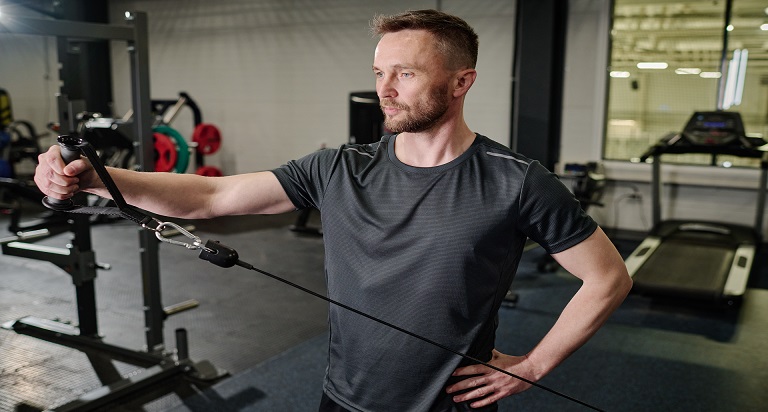
Cable Lateral Raise: Form, Muscles, and Programming
The cable lateral raise isolates the side delt while providing constant tension. Learn the form, the muscles worked, and how to program it.

Barbell Shrugs: Proper Form and Muscles Worked
Barbell shrugs build the upper traps faster than almost any move. Learn proper form, muscles worked, grip strategy, and how to program them.
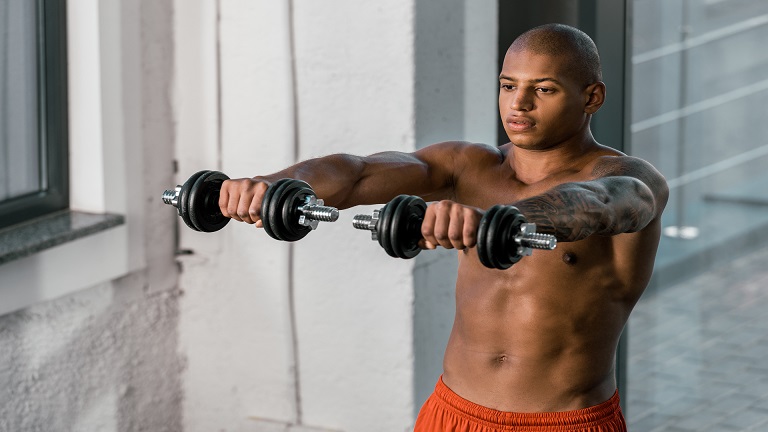
Dumbbell Front Raise: Form, Grip, and When to Skip
Learn proper dumbbell front raise form, grip variations, and when this lift is actually worth doing versus a waste of training volume.
Free newsletter
Evidence-based fitness and health insights, delivered to your inbox.
No spam. Unsubscribe at any time.
Thanks for subscribing!