Barbell Shoulder Press: Form, Muscles Worked & Variations
Master the barbell shoulder press with proper form, bar path mechanics, grip width, and mobility requirements for safe, strong overhead pressing.
Medical Disclaimer: This content is for informational purposes only and is not a substitute for professional medical advice. Consult a qualified healthcare provider before starting any new fitness or supplement program.
In this article
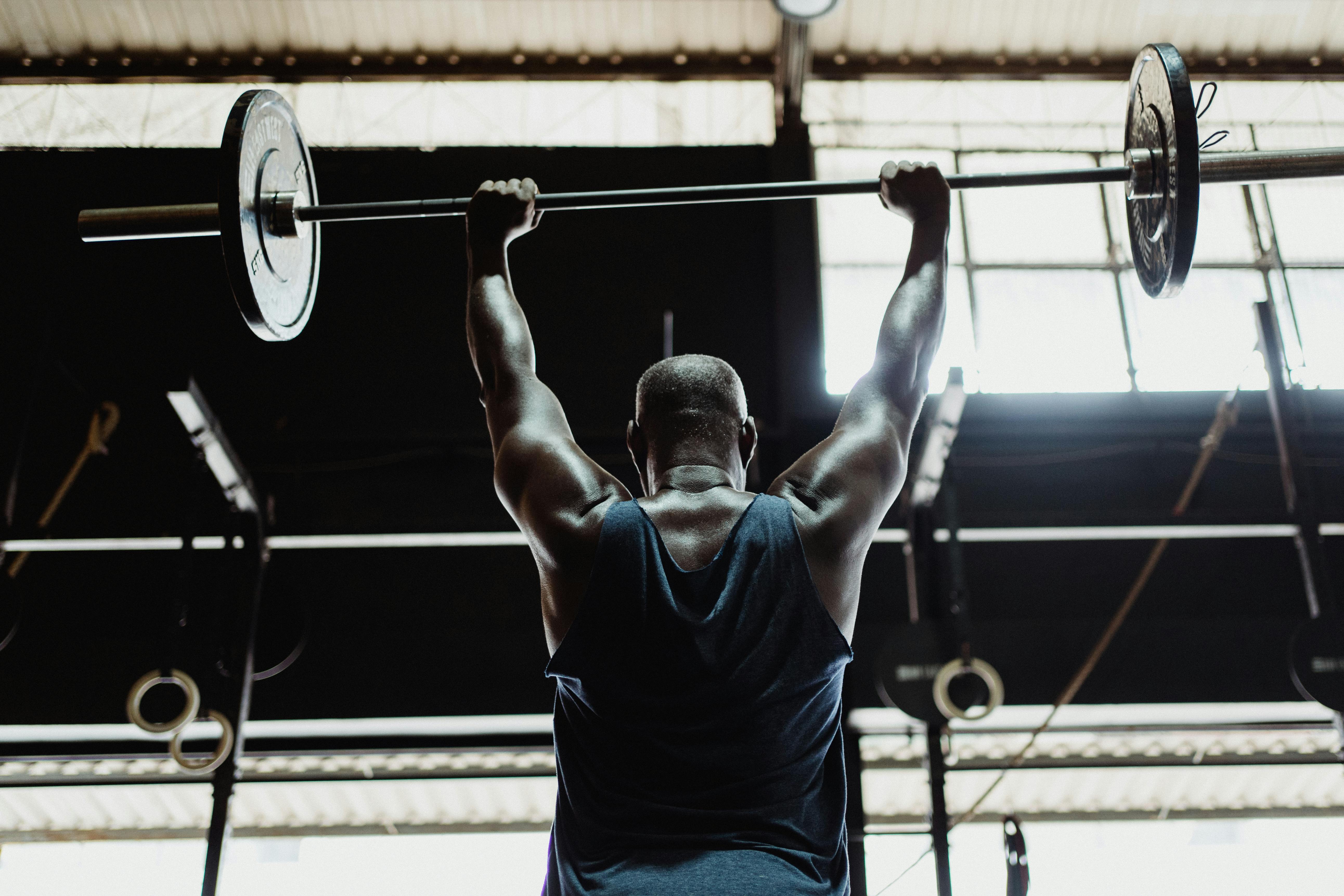
The barbell shoulder press is one of the most effective upper-body compound exercises for building pressing strength, shoulder size, and overhead stability. Also called the overhead press, military press, or strict press, this lift has been a foundation of serious training programs for over a century. It’s simple in concept but technically demanding, which is why most lifters leave significant strength and hypertrophy on the table with poor execution.
This guide covers everything that actually matters: proper form, bar path mechanics, muscle recruitment, standing versus seated tradeoffs, grip width as a programming variable, common mistakes, variations, and the mobility requirements that determine whether you can safely press overhead in the first place.
What Is the Barbell Shoulder Press?
The barbell shoulder press is a vertical pressing exercise where a loaded barbell is driven from shoulder level to a fully locked-out overhead position. The standing version, often called the military press or strict press, uses no leg drive. The bar moves through the press purely from upper-body force.
Terminology gets confusing because four different names describe essentially the same lift. Overhead press, military press, shoulder press, and strict press all refer to pressing a barbell vertically overhead with strict form. The push press is a related but distinct variation that uses an intentional leg drive to launch the bar past the sticking point, making it a power and strength movement rather than a pure upper-body exercise.
Muscles Worked by the Barbell Shoulder Press
The barbell shoulder press is a compound movement, meaning it recruits multiple muscle groups across multiple joints in a coordinated pattern. Understanding which muscles do what helps you diagnose weak points and program around them.
Primary Movers
The anterior deltoid (front head of the shoulder) is the primary mover throughout the press. It drives the initial push from shoulder level and remains heavily engaged until the bar clears the head. The lateral deltoid (side head of the shoulder) contributes significantly, especially as the bar approaches lockout and your humerus moves away from the body.
The triceps handle elbow extension during the top half of the press. Research on press biomechanics shows triceps activation spikes above the sticking point and at lockout, where the anterior delt contribution tapers and the triceps finish the rep.
Supporting Muscles
The upper chest (clavicular head of the pectoralis major) assists during the initial press, particularly with wider grips. The upper trapezius and serratus anterior coordinate scapular upward rotation, which is essential for safe overhead pressing without impinging the shoulder joint.
During the standing version, the core (rectus abdominis, obliques, erector spinae) and glutes work isometrically to prevent excessive lower back arch under load. The lats stabilize the shoulder girdle throughout the movement. This full-body tension requirement is why standing shoulder press is often called a “core exercise in disguise.”
How to Perform the Barbell Shoulder Press
Proper form starts before you unrack the bar and ends after you finish the last rep. Breaking the lift into setup, execution, and lockout makes the mechanics easier to drill.
Setup
Set the barbell in a squat rack or power rack at shoulder height (roughly your collarbone level). Load the bar. Step under it and grip slightly wider than shoulder-width, with your thumbs wrapped around the bar and elbows pointing forward and slightly down.
Your wrists should stack directly over your elbows. A broken wrist position (hand folded back behind the forearm) leaks force and stresses the wrist under heavy loads. Keep the wrist neutral. Unrack the bar with a small dip of the knees, take one or two steps back, and set your feet roughly hip-width apart.
Before you press, brace. Squeeze your glutes hard, tighten your core like you’re about to take a punch, retract and depress your shoulder blades slightly, and engage your lats. Think about trying to pull the bar apart. This creates a rigid pressing platform, which is the single biggest differentiator between a lifter who presses 185 lb and a lifter pressing 225 lb with the same shoulder size.
Execution
Take a breath, hold it, and press the bar upward. The bar path follows a slight J shape, not a straight vertical line. Here’s why: if you press straight up from your shoulders, your head is in the way. You either have to move your head back, or the bar goes around your face.
The cleaner solution is to start the press with a slight backward tilt. As the bar passes your face, pull your head back slightly. Once the bar clears your forehead, push your head through so the bar finishes directly over your shoulders and the middle of your feet. At full lockout, your ears should be in line with your biceps.
The sticking point typically occurs around 5 inches above the shoulders, where the anterior delt contribution decreases and triceps take over. Drive through this zone without slowing down. Hesitation at the sticking point is where missed reps happen.
Lockout
At the top of the press, your arms should be fully extended with the bar directly over your shoulders, your head pushed slightly forward (not ducked under the bar), and your glutes and core still engaged. Lock out the elbows without hyperextending.
Reverse the movement under control. Lower the bar back to shoulder level along the same J path (bar forward slightly, head back, bar down). Re-brace before the next rep. Exhale at the top of the rep or after racking the weight, not during the press itself under heavy loads.
Standing vs Seated Barbell Shoulder Press
Each version produces different adaptations and serves different goals.
Standing Barbell Shoulder Press
Standing pressing requires full-body stability. Your core, glutes, and lower back must resist the pressure of the load pushing you backward. This transfers pressing strength into real-world and sport-specific contexts, where force production rarely happens from a seated, stabilized position.
The tradeoff is the load. You can press less weight standing because your stabilizers fail before your shoulders do. For strength athletes (powerlifters, strongman competitors, Olympic lifters) and athletes in general, standing is the default choice.
Seated Barbell Shoulder Press
The seated version, performed on an upright bench set to 85-90 degrees, removes lower body involvement and forces the delts and triceps to move the weight purely through pressing strength. You can’t “cheat” with leg drive or body English because the bench prevents it.
For pure shoulder hypertrophy, seated pressing is often the better choice. Bodybuilders have favored it for decades because it allows heavier loading through the deltoids specifically and minimizes systemic fatigue from stabilization work. If your goal is bigger shoulders, seated barbell shoulder press on an adjustable bench deserves a place in your program.
The catch: you need an adjustable weight bench that goes to a full upright 85-90 degrees to set up correctly, plus a squat rack or rack that lets you unrack the bar at the right height.
Grip Width as a Programming Variable
Shoulder-width is the default advice as it’s balanced but you can actually play around with grip wifth to shift emphasis between muscles.
A grip just outside shoulder-width (where your forearms stay vertical when the bar is racked at collarbone level) maximizes anterior deltoid and triceps demand. This is the strongest position for most lifters and the default for strict pressing.
A wider grip (hands placed 4-6 inches outside shoulder-width) shifts more load to the medial deltoid and upper chest. This reduces the total weight you can press because it decreases stability, but it can be useful for targeting the side delts and upper chest fibers if those are lagging.
A narrower grip (hands placed at shoulder-width exactly or slightly inside) increases triceps demand and challenges shoulder mobility. It’s technically harder and typically results in less weight pressed, but it can highlight weak triceps or mobility limitations that caused plateaus in your standard press.
Cycling grip width across training blocks is an underused programming tool. It adds variety without changing the movement pattern, and it develops the shoulder complex more completely than pressing the same grip width for years.
Common Mistakes
Most issues with the overhead press come from three or four recurring form errors. Correcting these fixes the vast majority of plateaus and injury risk.
Excessive Lower Back Arch
Arching the lower back during the press turns the movement into an inverted incline bench press. It recruits the chest more, takes the delts out of the lift, and stresses the lumbar spine. Some arch is inevitable and fine. Extreme arch is the problem.
Fix it by squeezing the glutes hard before the press and keeping them squeezed throughout the rep. Think about tucking your ribs down toward your pelvis. If you still arch heavily, the weight is too heavy or you’re compensating for missing thoracic mobility.
Pressing the Bar in Front of the Head at Lockout
A finished press has the bar stacked over the middle of your feet. If the bar finishes in front of your face, you’ve leaked force forward and your shoulder is in an unstable position under load. This is both a strength leak and an injury risk.
Fix it by pushing your head through at lockout. Once the bar passes your face, your head should move forward slightly so the bar ends up over your shoulders, not in front of them.
Flared Elbows
When elbows flare out to 90 degrees from the torso, the shoulder joint moves into an impingement-prone position. Internally rotated, abducted humerus under load is where rotator cuff injuries happen.
Fix it by keeping your elbows slightly in front of the bar in the rack position, and driving them forward and up during the press rather than out. The forearms should stay roughly vertical throughout the movement.
Overly Bent Wrists
A wrist folded back under load transfers force through the joint inefficiently and can cause wrist pain over time. Keep the wrist stacked neutrally over the forearm. The bar should sit in the heel of your palm, not in your fingers.
Barbell Shoulder Press Variations
Once you’ve built a base with the standard press, variations let you target weak points or add variety without abandoning the core movement pattern.
Push Press
The push press uses an intentional dip and drive from the legs to launch the bar past the sticking point. This lets you handle heavier weights than a strict press, which can drive strength adaptations and trains explosive power.
The tradeoff is reduced isolation of the shoulders. Push press is useful for overload work and power development, but it shouldn’t replace strict pressing for shoulder hypertrophy.
Seated Barbell Press
Covered earlier in the standing vs seated section. Removes leg drive, allows heavier pure pressing loads, excellent for hypertrophy-focused programs.
Arnold Press
Usually performed with dumbbells rather than a barbell, the Arnold press rotates the wrists from a supinated grip at the bottom to a pronated grip at the top. This increases range of motion and hits multiple deltoid heads in a single movement. Good as an accessory exercise, not as a main pressing lift.
Landmine Press
One end of a barbell is anchored in a landmine attachment, and the other end is pressed overhead from shoulder level. The angle is roughly 60-70 degrees rather than fully vertical, which makes it gentler on the shoulder joint and useful for lifters rehabbing shoulder issues or working around mobility limitations.
Behind-the-Neck Press
A more divisive variation. The behind-the-neck press was standard in bodybuilding for decades, then fell out of favor due to shoulder injury concerns in the 1990s and 2000s. Current research tells a more nuanced story: for lifters with full shoulder external rotation and good thoracic mobility, behind-the-neck pressing is biomechanically safe. Loaded abduction actually increases subacromial space rather than narrowing it.
The real issue is mobility. Most lifters don’t have the range of motion to get the bar behind their head cleanly without compensating through the cervical spine, rotator cuff, or lower back. If you can pass the wall mobility screen covered later in this guide with room to spare, behind-the-neck press is a legitimate exercise. If you can’t, stick with front-rack pressing until your mobility catches up.
Use lighter loads than your front press (typically 15-25% less), focus on smooth controlled reps, and stop immediately if you feel any pinching or instability.
Programming the Barbell Shoulder Press
How many sets and reps depends on your primary goal. The barbell shoulder press fits into both strength and hypertrophy programs, but the rep schemes differ.
For strength, work in the 3-6 rep range at 80-90% of your 1RM. Perform 3-5 working sets, with 2-4 minutes of rest between sets to allow full recovery of the nervous system and triceps.
For hypertrophy, 6-12 reps per set at 70-80% of your 1RM is the sweet spot. 3-5 working sets per session, with 90 seconds to 2 minutes of rest between sets. Some lifters respond well to higher volume, with 4-6 sets in the 8-15 rep range.
Frequency matters too. You can recover reasonably fast from it because it’s less systemically demanding than squats or deadlifts. Training it 2 times per week, either as a main lift on push days or as a rotating overhead movement, usually beats pressing once per week. For more context on structuring full programs, our guide to muscle building workout plans covers how pressing slots into weekly splits.
The barbell shoulder press is one of the core compound exercises for building muscle and should be a staple in any complete upper-body program. If you’re focused on size, principles from our article on how to increase muscle growth apply directly to pressing volume and progression.
Mobility Requirements and Screening
Before you load heavy weight on a bar and press it overhead, your joints need to be able to get to the positions required without compensating. Most lower back pain during pressing comes from compensating for missing thoracic and shoulder mobility.
A simple screen: stand against a wall with your heels, glutes, upper back, and head all touching. Hold an empty barbell at shoulder level with your normal pressing grip. Press it overhead. Can your arms reach a position where the bar is directly over your shoulders, elbows locked, without your lower back pulling away from the wall?
If yes, your mobility is adequate. If no, you’re compensating through the lumbar spine, and loading the movement heavy will cause lower back pain or overstress the shoulder joint. Work on thoracic extension and lat/pec mobility before chasing a bigger shoulder press.
Research on shoulder impingement and thoracic posture shows this connection directly. A 2019 study by Otoshi et al. found that individuals with shoulder impingement syndrome had greater thoracic kyphosis and significantly less thoracic extension range of motion than matched healthy controls. The thoracic spine directly affects shoulder mechanics overhead, so mobility work should be done consistently to reach or maintain correct positions.
Equipment Considerations
Pressing overhead requires, at minimum, a barbell and some plates. To press heavy safely, you also need a rack that can hold the bar at shoulder height with safety arms or pins set appropriately. If a heavy rep fails, you want somewhere safe for the bar to land.
For a home gym setup, a squat rack with adjustable safeties covers the pressing scenario. An adjustable bench lets you transition between standing and seated pressing work. For loading the bar, bumper plates are the safer choice than iron plates because a failed rep dropped from overhead won’t damage your floor or bar. For lifters pressing over 200 lb, a weightlifting belt adds intra-abdominal pressure that supports the spine under heavy pressing loads.
If you don’t have access to a barbell or rack, dumbbells are a perfectly viable alternative. Our guide to strength training with dumbbells covers how to build a full upper-body program around a pair of adjustable dumbbells.
Frequently Asked Questions
Is barbell shoulder press better than dumbbell shoulder press?
How much should I be able to barbell shoulder press?
Why does my lower back hurt when I barbell shoulder press?
Should I do barbell shoulder press standing or seated?
Is the barbell shoulder press bad for your shoulders?
How often should I barbell shoulder press?
Continue reading
Barbell Bench Press: Form, Muscles, and Programming
Master the barbell bench press with evidence-based form cues, grip width guidance, and a programming framework that optimizes progress.
Dumbbell Romanian Deadlift: Form, Muscles, and Programming
Master the dumbbell Romanian deadlift with evidence-based form cues, range of motion guidance, and a programming framework for stronger hamstrings.
Barbell Hip Thrust: Form, Muscles Worked, and Programming
Master the barbell hip thrust with evidence-based form cues, foot placement, and a programming framework for stronger, more developed glutes.
Free newsletter
Evidence-based fitness and health insights, delivered to your inbox.
No spam. Unsubscribe at any time.
Thanks for subscribing!