How to Barbell Squat: Form, Depth, and Working Weights
Learn proper barbell squat form, high bar vs low bar mechanics, depth standards, and working weight benchmarks for every level.
Medical Disclaimer: This content is for informational purposes only and is not a substitute for professional medical advice. Consult a qualified healthcare provider before starting any new fitness or supplement program.
In this article
What Is the Barbell Squat
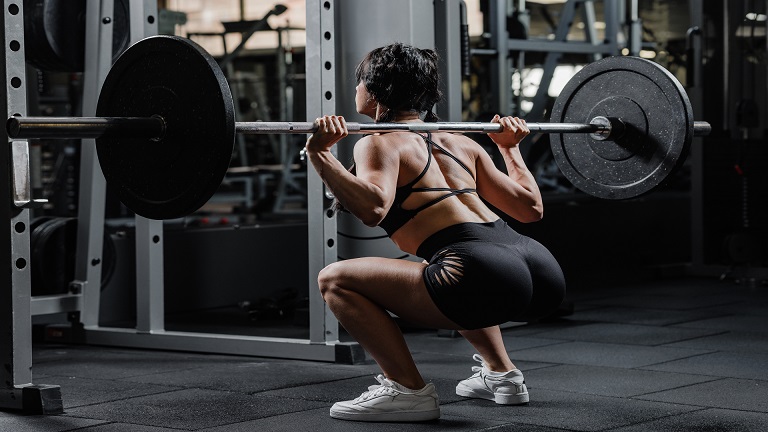
The barbell squat is a compound lower body exercise where you hold a loaded barbell across your upper back, descend until the hip crease drops below the top of the knee, then drive back up to standing. It sits alongside the bench press and deadlift as one of the three foundational lifts in powerlifting, and it appears in nearly every strength and hypertrophy program for a reason. Few exercises train more muscle mass per rep.
The barbell squat builds raw lower body strength, drives quadriceps and glute growth, reinforces spinal stability under load, and carries over to virtually every athletic movement that requires extending the hips and knees against resistance. Required equipment is simple: a barbell, weight plates, and a squat rack. The standard Olympic barbell weighs 20 kilograms (45 pounds) before you add any plates.
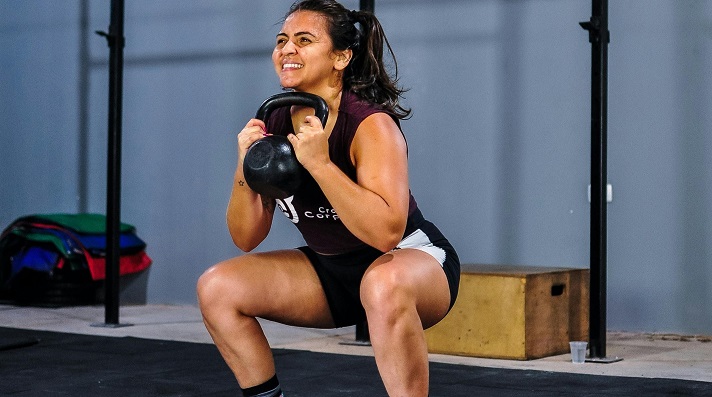
If you are new to weighted squatting, the kettlebell goblet squat is the standard progression to use before adding a barbell to your back.
Muscles Worked in the Barbell Squat
The barbell squat trains the lower body more completely than almost any other single lift.
The quadriceps extend the knees on the way up. Bar position changes how hard they work, with high bar placing more demand on them than low bar.
The gluteus maximus extends the hips and acts as the primary mover out of the bottom of the lift. Deeper squats produce greater glute activation and growth.
The hamstrings assist with hip extension and stabilize the knee, though they contribute less than other muscles. The squat is a relatively poor exercise for hamstring hypertrophy on its own.
The adductors assist with hip extension at the bottom of the lift and grow substantially from full-range squat training. The adductor magnus actually contributes the largest extension moment at the deepest portion of a squat.
The spinal erectors maintain spinal extension against the load on your back, preventing the chest from collapsing forward.
The core muscles, including the rectus abdominis, obliques, and transverse abdominis, brace against the load and stabilize the trunk throughout the lift.
How to Perform the Barbell Squat
Setup
Set the safety pins in the rack at roughly mid-thigh height so that you can fail a rep safely. Set the bar height a few inches below shoulder level so you do not have to come up on your toes to unrack it.
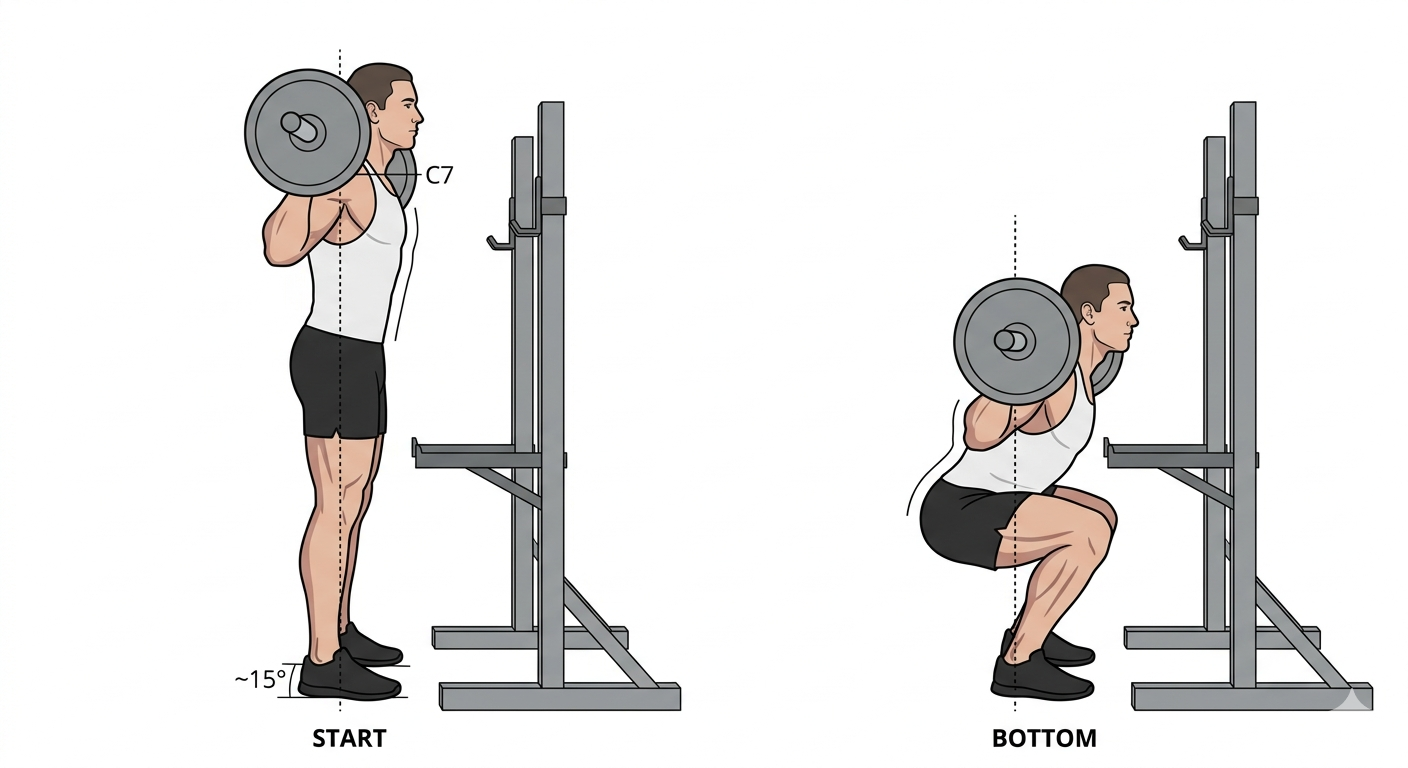
Walk under the bar and place it across your upper traps just below the prominent vertebra at the base of your neck (high bar) or across the rear deltoids about two inches lower (low bar). Grip the bar slightly wider than shoulder width with the wrists stacked over the forearms. Pull the shoulder blades together to create a stable shelf for the bar.
Stand up to unrack, then take two short steps back and stop moving your feet. Set your feet shoulder-width apart with the toes angled out roughly 15 to 30 degrees.
Going Down
Take a deep breath into your belly and brace as if you are about to be punched. Initiate the descent by simultaneously breaking at the hips and knees rather than choosing one or the other.
Push the knees out so they track in the same direction your toes are pointing. Keep the chest up and the spine neutral. Continue lowering until the hip crease drops below the top of the knee. This is “below parallel” and counts as a full squat.
Coming Up
Drive through the midfoot, not the heels or the toes. Extend the hips and knees together so the bar travels in a vertical line over the midfoot throughout. Exhale through the sticking point, which is typically about a third of the way up. Finish with the hips and knees fully (or almost) locked out.
High Bar vs Low Bar Squat
Most answers on the high bar versus low bar question stops at “high bar trains the quads, low bar trains the posterior chain.” That is technically true but it skips the mechanical reason, which is the part that actually matters when choosing which to use.
High bar positions the load roughly over the C7 vertebra, which sits closer to the front of the upper back. This forces a more upright torso to keep the bar over the midfoot. An upright torso means a longer moment arm at the knee and a shorter moment arm at the hip, so the quads work harder and the hips work slightly less.
Low bar positions the load across the rear deltoids, two to three inches lower on the back. To keep the bar centered over the midfoot, you have to lean forward more from the hips. This forward lean reduces the hip moment arm, making the lift more mechanically efficient for the hip extensors. The shortened hip moment arm is the actual reason low bar squatters typically move more weight, not the muscle recruitment difference itself.
Body proportions matter more than most lifters realize. Lifters with longer femurs relative to their torsos tend to lean forward more in any squat and often gravitate to low bar with a wider stance. Lifters with shorter femurs and longer torsos can stay more upright and often prefer high bar with a narrower stance.
A 2024 biomechanical study by Larsen and colleagues compared high and low bar squats at three-rep max loads and found that when stance width is standardized, bar placement plays a relatively minor role in muscle forces and the weight lifted. Stance and individual mechanics matter more than the bar position label itself. Pick whichever feels stronger for your build and stick with it.
Common Barbell Squat Mistakes
Knees caving inward. When the knees collapse toward each other on the way up, the adductors are overpowered or the glutes are weak. The cue “spread the floor with your feet” works better than “push the knees out.” Try to push your feet laterally as you stand up. This recruits the glute medius and keeps the knees tracking in line with the toes. A pair of knee sleeves can also provide proprioceptive feedback that helps with tracking.
Worrying about forward knee travel. The “keep your knees behind your toes” rule that gets repeated in every gym is outdated. When you squat deep, the knees pass the toes. That is normal and safe for healthy knees. What matters is that the knees track in the same direction the toes are pointing, not whether they travel forward. Forcing the knees back behind the toes increases forward lean and shifts load to the lower back unnecessarily.
Partial depth. Stopping the squat at parallel or above leaves significant glute and adductor growth on the table. Train to the deepest range you can hold position in.
Looking up. Cranking the head and eyes upward forces the neck into hyperextension and pulls the bar off its path. Pick a spot on the floor about two meters in front of you and keep your gaze there throughout the lift.
Heels rising at the bottom. If your heels lift off the floor, you have either limited ankle mobility, a too-narrow stance, or both. Widen the stance slightly, work on ankle mobility, or use an elevated heel position (see below).
Excessive forward lean. A small forward lean is normal, especially with low bar. A collapsing forward lean where the chest drops toward the thighs usually signals a weak upper back, weak core bracing, or a bar position drifting too high on the neck.
Ankle and Hip Mobility for the Barbell Squat
Ankle dorsiflexion limits how deep you can squat with an upright torso. Test it with the knee-to-wall drill: stand facing a wall in a lunge stance with the front foot four inches back. Try to touch the front knee to the wall without lifting the heel. If you cannot do four inches comfortably, your ankle mobility is restricting your squat.
Heel elevation is the practical fix. Wedging the heels up with a small plate or wearing weightlifting shoes (which have a rigid heel of typically 0.6 to 0.75 inches) artificially extends ankle range, lets you stay more upright, and often improves squat depth instantly. Plenty of accomplished lifters squat in elevated heels permanently and tall lifters and lifters with naturally short Achilles tendons benefit most. That said, it’s smart to also work on your ankle mobility at the same time.
Hip mobility tends to be less of an absolute limiter for the squat than ankle mobility, but tight hip flexors and adductors can restrict depth in some lifters. Targeted mobility work for the hips, especially in the deep squat position itself, can open up range without forcing the spine to compensate.
Working Weight Benchmarks for the Barbell Squat
These benchmarks represent working sets at moderate rep ranges of 5 to 10 reps, not one-rep maxes. For 1RM context, you can use a 1RM calculator.
Beginner. Working sets at roughly bodyweight. A 75 kilogram lifter squatting 75 kilograms for sets of 5 to 8 reps is at the beginner benchmark. This typically represents the point where form is consistent and the lifter has trained the movement for several months.
Intermediate. Working sets at roughly 1.5 times bodyweight. The same 75 kilogram lifter squatting 110 to 115 kilograms for sets of 5 reps. At this level, the movement pattern is locked in and weak points usually become specific (such as hip drive out of the hole or maintaining position at depth).
Advanced. Working sets at 2 times bodyweight or more. A 75 kilogram lifter squatting 150 kilograms or more for working sets. This level typically requires years of consistent training, attention to programming, and serious recovery management.
These numbers reflect male lifters at moderate body fat levels. Female lifters typically reach the beginner benchmark at 0.75 to 1 times bodyweight, intermediate at 1.25 to 1.5 times, and advanced at 1.75 times bodyweight or more.
When to Use a Belt for the Barbell Squat
A weightlifting belt creates intra-abdominal pressure when you brace against it, increasing trunk stiffness and allowing roughly 10 percent more weight at top loads. This is real and measurable, but the benefit only shows up at high relative intensities.
Below 80 percent of your one-rep max, a belt offers no meaningful advantage. Wearing one for warm-up sets or hypertrophy-range training (sets of 8 to 12 at moderate weights) is mostly cosmetic. It does not weaken the core, but it does not strengthen it either.
The right time to use a belt is for top sets of strength training at or near 80 percent of 1RM and for any one-rep max attempt. Beginners can squat for years without ever needing one. Once you are loading working sets above bodyweight and pushing intensity, a proper lever or prong belt becomes a worthwhile addition.
Programming the Barbell Squat
Frequency depends on goal and recovery capacity. One to three squat sessions per week works for nearly everyone. Strength-focused programs typically squat heavy once or twice per week. Hypertrophy programs often squat two to three times per week at moderate loads.
For strength: three to five sets of three to five reps at 80 to 90 percent of 1RM. Long rest periods of three to five minutes between sets.
For hypertrophy: three to four sets of six to twelve reps at 65 to 80 percent of 1RM. Shorter rest periods of one and a half to three minutes work well. How rep ranges affect muscle growth covers the underlying mechanics in more detail.
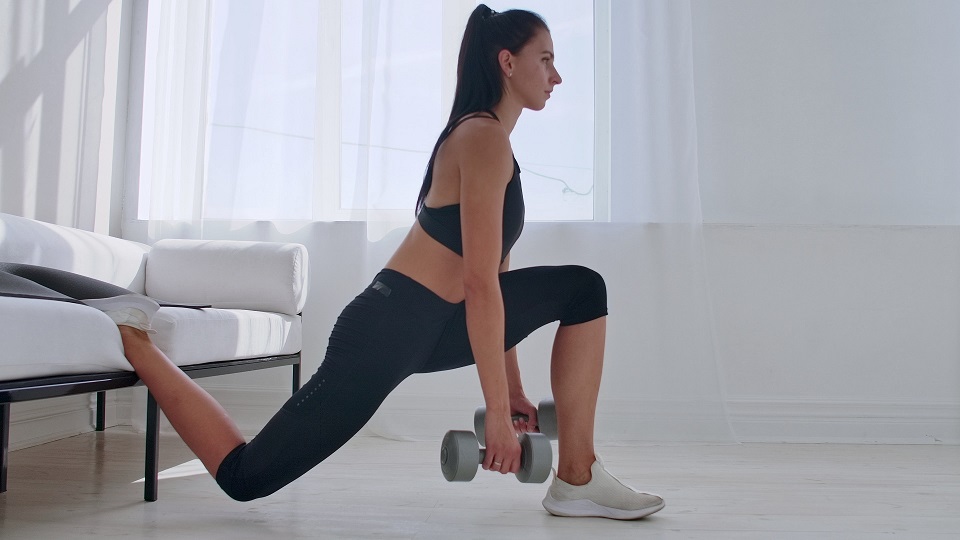
Place the squat early in the session, after a thorough warm-up but before any other lower body work. Squatting after high-rep accessory work compromises performance and form. A typical lower body session sequence: warm-up, barbell squat, a single-leg movement such as the Bulgarian split squat, then accessory work for the hamstrings, calves, and core. The squat fits naturally into any compound-exercise-focused program and should anchor most lower body sessions.
For home gym setups, a proper squat rack and a set of bumper plates form the foundation. Both are non-negotiable for training the squat seriously over time.
Takeaway
The barbell squat builds more functional lower body strength and muscle per rep than nearly any other single exercise. If you are new to it, start light and prioritize technique over weight. Get comfortable hitting full depth, learn what bracing feels like under load, and let the loads increase over months and years. The lift rewards patience and punishes ego, so be sure to build the foundation right from the start.
Frequently Asked Questions
Is the barbell squat safe for the knees?
How deep should I squat?
High bar or low bar barbell squat, which is better?
Do I need a belt to squat?
How often should I barbell squat?
Is the barbell squat enough for legs?
Continue reading
Kettlebell Goblet Squat: Form, Benefits & Variations
Master the kettlebell goblet squat with proper form, why it lets you squat deeper, and when to graduate to a barbell.
Bulgarian Split Squat: Form, Benefits & Workouts
Bulgarian split squat guide: proper form, muscles worked, research-backed benefits, and complete workout programs from beginner to advanced.
Best Compound Exercises for Building Muscle
The best compound exercises for building muscle, organized by movement pattern. Plus how to balance compounds with isolation work.
Free newsletter
Evidence-based fitness and health insights, delivered to your inbox.
No spam. Unsubscribe at any time.
Thanks for subscribing!