Dumbbell Incline Bench Press: Form, Angle, and Programming
Master the dumbbell incline bench press, understanding and learning about bench angle, form, and programming.
Medical Disclaimer: This content is for informational purposes only and is not a substitute for professional medical advice. Consult a qualified healthcare provider before starting any new fitness or supplement program.
In this article
The dumbbell incline bench press is the gold-standard upper chest builder, and the single most important variable on this lift is the bench angle, which most lifters get wrong. This guide answers that question with research, then covers the form cues, the safe dumbbell-into-position protocol, and a programming framework with concrete numbers.
What Is the Dumbbell Incline Bench Press?
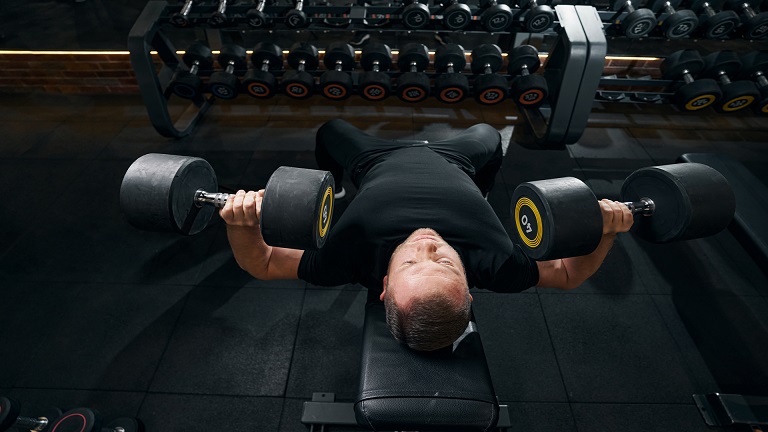
The dumbbell incline bench press is a compound pressing exercise performed lying back on an inclined bench (typically 30 degrees), pressing two dumbbells from the upper chest position to full arm extension overhead. The lift biases the upper portion of the chest in a way that flat bench cannot, which is why it earns a permanent place in any well-designed chest program.
It belongs to the broader pressing family along with the flat bench press, overhead press, and barbell incline variants. As a foundational upper-body compound, the dumbbell version is often preferred over the barbell variant for greater range of motion at the top of the rep, unilateral imbalance correction, and gentler shoulder positioning. For broader context on dumbbell-based programming, see our guide on strength training with dumbbells.
Muscles Worked by the Dumbbell Incline Bench Press
The primary movers are the upper pecs (specifically the clavicular head of the chest), the front delts, and the triceps. The upper pecs handle the angled adduction toward the centerline, the front delts assist with the press from the bottom position, and the triceps drive the lockout at the top.
Secondary muscles include the lower pecs (less involvement than on flat bench, but still active), the back (the lats and traps stabilize through scapular retraction), the biceps (assist with control on the descent), and the core (anti-extension stabilization). The lift recruits more than just the upper chest, but the chest receives the targeted stimulus that flat bench can’t deliver.
How to Set the Bench Angle
The bench angle is the most important programming variable on this lift, and the answer is more specific than the “30 to 45 degrees” range you’ll see almost everywhere else. Here’s the practical breakdown:
30 degrees (the default)
The optimal angle for upper pec activation per the research. This is the angle to use unless you have a specific reason otherwise. Most adjustable benches have a 30 degree position precisely because it’s the standard for incline pressing.
15 degrees (closer to flat)
A shallower angle that hits the upper chest less but allows heavier loads. Useful as a middle-ground option for lifters who want some upper chest involvement while prioritizing total chest mass.
45 degrees (the boundary)
At the upper limit. Some lifters use 45 degrees, but pec activation starts declining and front delt involvement starts climbing. Acceptable if your bench doesn’t have a 30 degree click, but not preferable.
60 degrees and steeper
This turns into a shoulder press variant. The upper pecs do less work, the front delts do most of the work. If shoulder development is the goal, do an actual shoulder press. If upper chest development is the goal, lower the bench.
The practical recommendation
Set the bench at 30 degrees. If your bench doesn’t have a 30 degree position, anywhere in the 25 to 35 range works. Avoid going above 45 degrees for upper chest training.
A note on bench quality: a sturdy adjustable bench with a positive 30 degree lock matters. Wobbly benches that shift mid-set are dangerous with heavy dumbbells. If you’re training at home and your bench wobbles or doesn’t have a clear 30 degree position, see our guide on the best adjustable weight bench to upgrade.
How to Perform the Dumbbell Incline Bench Press
Setup
Set the bench at 30 degrees. Place your dumbbells on the floor next to the foot end of the bench, or have a spotter ready to hand them to you. Sit on the bench with your feet planted firmly on the floor.
Pick up the dumbbells from the floor doing a deadlift (flat back), do a mini curl while simultaneously sitting on the bench so that the dumbbells end up on your thighs, just above your knees.
Pull your shoulder blades together and DOWN before laying back. Retraction alone is not enough; active depression (pulling the shoulder blades toward your back pockets) creates the stable shelf the dumbbells press against. The cue that works for most lifters: “put your shoulder blades in your back pockets, and keep them there for the entire set.”
In a controlled motion, lay back on the bench while simultaneously kicking one knee at a time to drive the dumbbells up to the starting position over your chest. This “knee kick” technique is critical for getting heavy dumbbells safely into position.
Once laid back, rotate the dumbbells from neutral grip to pronated grip (palms forward). Wrists stacked vertically over elbows, dumbbells sitting in the heel of the palm, not the fingers. Arms perpendicular to the bench surface at the top, dumbbells over the shoulders, not over the chest. Take a deep breath into your belly and brace.
Coming Up
Drive your feet into the floor and press the dumbbells back up. The dumbbells should arc slightly inward toward each other on the way up, finishing closer together at the top than at the bottom.
This inward arc is what separates a good rep from a wasted one. Pressing in straight vertical lines loses the upper pec contraction at the top. The dumbbells should converge toward the midline, even if they don’t actually touch.
At the top, the dumbbells can lightly touch or stop just short, depending on preference. Squeeze the upper chest at the top for a brief beat. Finish with elbows nearly locked but not jammed straight; a small bend at lockout protects the elbows.
Do not rotate the dumbbells in toward each other excessively at the top. That’s a different exercise (the dumbbell flye). The press finishes with the dumbbells parallel or near-parallel, not collapsed inward.
Going Down
Lower the dumbbells in a controlled descent over 2 to 3 seconds. Keep your elbows at roughly 45 to 70 degrees from the torso. Not flared out at 90 degrees, not fully tucked.
The dumbbells should arc slightly outward and downward as they descend. Lower until your upper arm is parallel with the bench surface, OR until the dumbbells reach approximately mid-chest level, whichever comes first.
This is the single most overlooked cue in dumbbell incline pressing. Dumbbells “allow” greater range of motion than the barbell, but going below upper-arm-parallel puts the shoulders in a vulnerable position. More range of motion is not always better. Stop at the depth that keeps the shoulders in a strong position, even if it feels short.
Maintain shoulder blade retraction throughout the descent and do not let the chest collapse. The cue “keep the chest tall throughout” is a useful reminder mid-set.
After the Set
After the last rep, bring the dumbbells down to the chest, sit up using core strength while the dumbbells rest on the thighs, and place them down. Don’t try to stand up while still holding them overhead.
Common Form Mistakes (and How to Fix Them)
Bench angle too steep: anything above 45 degrees significantly reduces pec activation and overloads the front delts. Fix: set the bench at 30 degrees. If the bench doesn’t have a 30 degree position, use the angle closest to it without exceeding 45.
Going too low at the bottom: dumbbells “allow” greater range of motion than the barbell, but going below upper-arm-parallel-to-bench puts the shoulders in a vulnerable position. Fix: stop the descent when the upper arm is parallel with the bench surface, or when the dumbbells reach approximately mid-chest level. Greater range of motion is not always better.
Flaring elbows to 90 degrees: the most common cause of shoulder pain on this lift. Fix: keep elbows at 45 to 70 degrees from the torso at the bottom of the rep. The cue “tuck elbows toward the ribs, not toward the head” works for most lifters.
Losing shoulder blade retraction mid-set: when the shoulder blades flatten against the bench, the shoulders take over and lose their stable platform. Fix: actively pull the shoulder blades together and down before the first rep, and check that the chest stays high throughout the set. Lower the load if you cannot maintain the position.
Pressing with palms straight up only: the dumbbells should arc slightly inward at the top. Pressing in straight vertical lines loses the upper pec contraction at the top of the rep. Fix: press up and slightly inward, finishing with the dumbbells closer together at the top than at the bottom.
Bouncing dumbbells off the chest: uses the rib cage as a spring instead of pressing through the working muscles. Fix: lower under control, pause briefly at the bottom, then press.
Dumbbells crashing together at the top: banging dumbbells together at lockout looks aggressive but damages the dumbbells and risks dropping them. Fix: light touch or stop just short.
Bent-back wrists: the dumbbell settling in the fingers instead of the heel of the palm puts the wrists in a vulnerable position. Fix: stack wrists vertically over elbows at the bottom, with the dumbbells in the heel of the palm. Wrists should be straight, not bent backward.
How to Program the Dumbbell Incline Bench Press
The dumbbell incline bench press fits naturally on push day, upper body day, or as the second pressing lift in a chest-focused session after flat bench. It pairs cleanly with horizontal pulling work on the same day for a balanced push-pull session. On a classic upper-lower split, it pairs with the overhead press and pulling work on upper days.
For pure strength work, 3 to 4 sets of 6 to 8 reps at 75%+ of 1RM. For hypertrophy, 3 to 4 sets of 8 to 12 reps at 65 to 75% of 1RM. The dumbbell incline press tolerates moderate-to-higher rep ranges well because the lighter absolute loads and stability demand limit max-effort training. The fuller breakdown on rep ranges for muscle growth applies cleanly here.
Most lifters benefit from training the dumbbell incline press 1 to 2 times per week. If flat bench is the priority lift, train incline once. If chest balance is the priority, or if upper chest is a lagging area, train it twice. The recovery cost is similar to flat bench (long-recovery on chest and shoulders), so going beyond 2 sessions per week typically interferes with flat bench progress without proportional upper chest gains.
Working Weight Benchmarks (per dumbbell)
Beginner: 0.3 to 0.4 times bodyweight per dumbbell for 8 to 10 reps. For a 75 kg (165 lb) lifter, that’s roughly 22 to 30 kg (50 to 65 lb) per hand.
Intermediate: 0.4 to 0.6 times bodyweight per dumbbell for 6 to 8 reps. Same 75 kg lifter: 30 to 45 kg (65 to 100 lb) per hand.
Advanced: 0.6 to 0.8 times bodyweight per dumbbell or more for 5 to 6 reps. 75 kg lifter: 45 to 60 kg or more (100 to 130 lb+) per hand.
Progression Scheme
Once you hit the top of your rep range across all working sets, add 2.5 kg per dumbbell the following session and drop back to the bottom of the rep range. Repeat the cycle. This is double progression, and it works well within the dumbbell incline’s typical rep ranges.
Should You Use Wrist Wraps for Dumbbell Incline Press?
Most lifters do not need wrist wraps for the dumbbell incline press. The dumbbell setup keeps the wrist in a more neutral position than the barbell variant, and forearm grip strength typically catches up to chest strength as you progress. Below 40 kg per dumbbell, wraps offer no real benefit.
At advanced loads (above 40 kg per dumbbell), some lifters use light wraps for additional wrist stability during the heaviest work. This is preference rather than necessity. If wrists hurt during this lift, the cause is usually bent-back wrist position rather than insufficient support. Fix the wrist alignment first, and most wrist pain resolves without needing wraps.
Takeaway
The dumbbell incline bench press is the foundation of upper chest development, and getting the bench angle and form right pays dividends for years of training. Set the bench at 30 degrees, control the descent, train it 1 to 2 times per week, and pair it with adequate recovery and protein intake for muscle growth. For the broader principles on driving long-term hypertrophy progress, see our guide on how to increase muscle growth.
Frequently Asked Questions
What's the best bench angle for the dumbbell incline bench press?
How heavy should I go on dumbbell incline bench press?
Is the dumbbell incline press better than the barbell version?
Can I train flat bench and incline bench in the same workout?
How often should I do dumbbell incline bench press per week?
Why does my shoulder hurt during dumbbell incline press?
Continue reading
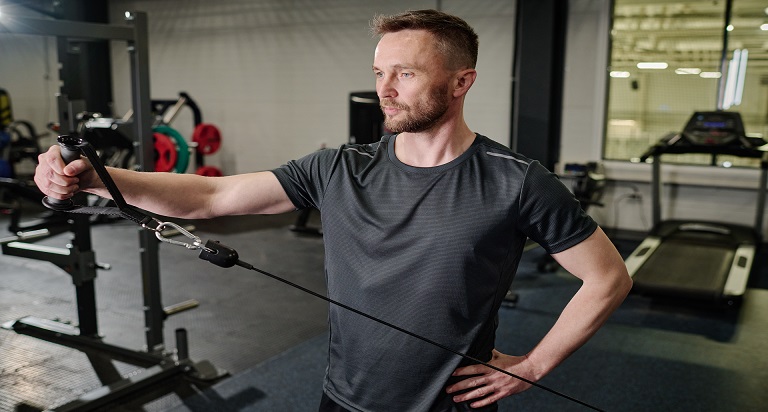
Cable Lateral Raise: Form, Muscles, and Programming
The cable lateral raise isolates the side delt while providing constant tension. Learn the form, the muscles worked, and how to program it.
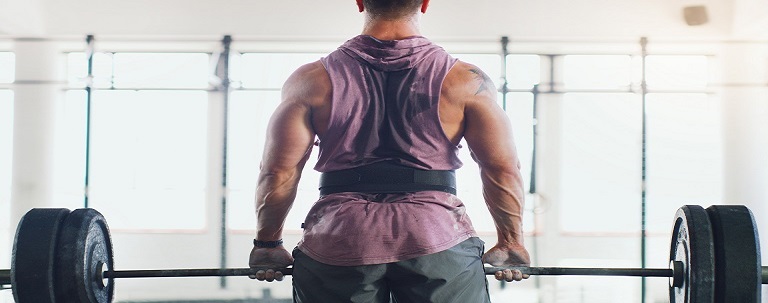
Barbell Shrugs: Proper Form and Muscles Worked
Barbell shrugs build the upper traps faster than almost any move. Learn proper form, muscles worked, grip strategy, and how to program them.
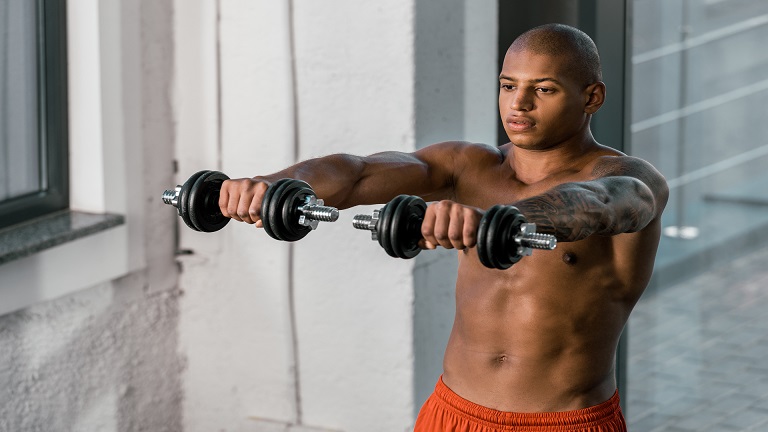
Dumbbell Front Raise: Form, Grip, and When to Skip
Learn proper dumbbell front raise form, grip variations, and when this lift is actually worth doing versus a waste of training volume.
Free newsletter
Evidence-based fitness and health insights, delivered to your inbox.
No spam. Unsubscribe at any time.
Thanks for subscribing!